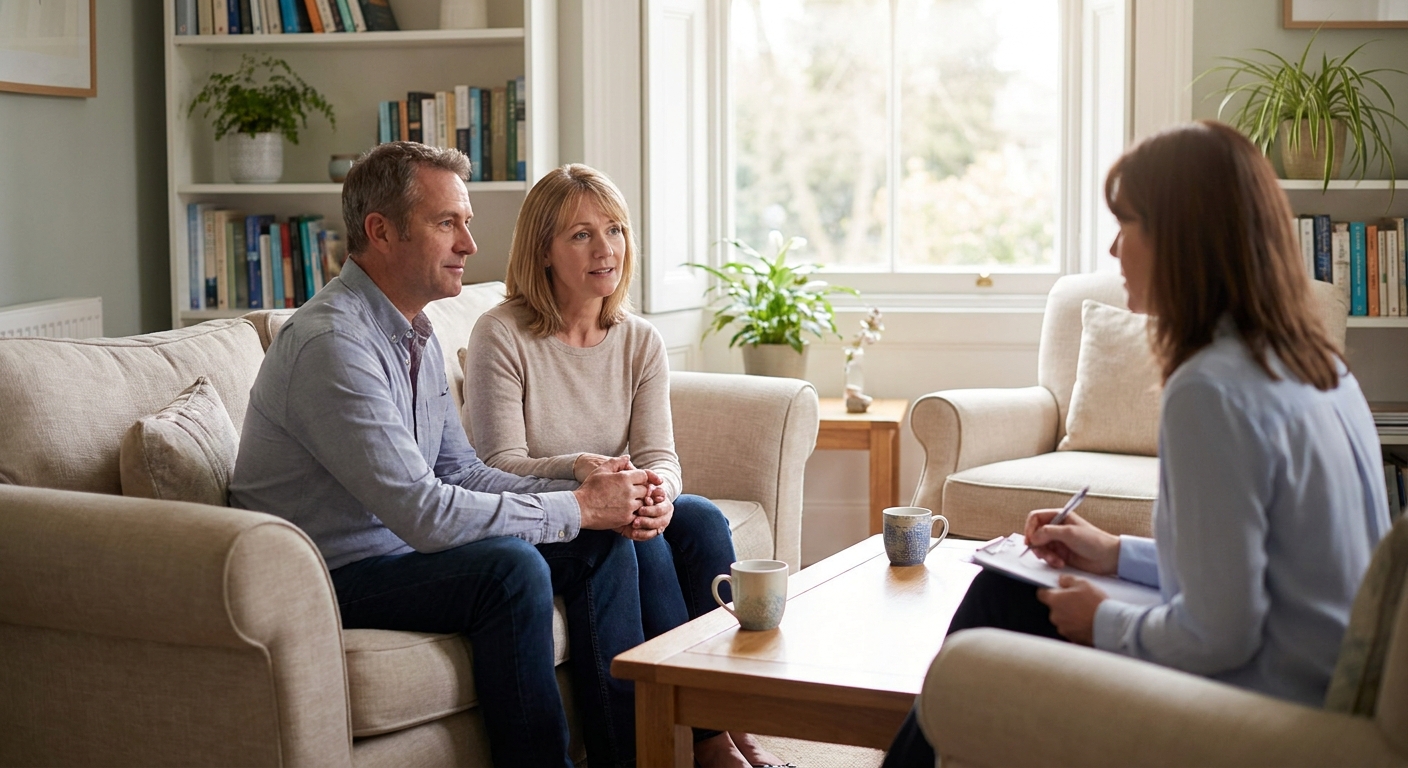
Second marriages carry a different weight than first ones — ex-spouses, blended kids, and unresolved wounds from a prior relationship don't disappear just because you signed a new marriage license. Counselling for second marriages in Lethbridge addresses those specific pressures instead of treating remarriage as a repeat of the first attempt.
- Counselling for second marriages works when it targets blended-family conflict and coparenting, not generic communication tips.
- Couples carrying trust wounds from a first marriage need infidelity-specific work before general reconnection coaching.
- Brandon Boorsma Counselling in Lethbridge uses CBT and Gottman-based methods suited to remarriage dynamics in 2026.
- Skip any counselling plan that ignores coparenting with an ex — that gap stalls most second-marriage progress within months.
Why this matters
Second marriages fail at a higher rate than first marriages, and the reason usually isn't a lack of love — it's unresolved structure. Blended households, coparenting arrangements, and money habits carried over from a first marriage create friction that standard newlywed counselling was never built to solve.
I work with remarried couples in Lethbridge who've already done the hard work of choosing each other again. What they're often missing isn't commitment — it's a framework for the parts of remarriage that first-marriage counselling skips entirely, like couples counselling for blended families and how to fold an ex-spouse's parenting decisions into daily life without constant conflict.
Who this is for
This guide is for couples remarrying with kids from a previous relationship, couples where one or both partners carry trust damage from infidelity or divorce, and couples who feel like they're arguing about the same three things — money, parenting, and loyalty — on a loop. If you're newly engaged with no prior marriage or kids involved, a different starting point fits better; that's covered separately.
What to look for in counselling for second marriages
Blended family dynamics get addressed directly
Step-parent authority, discipline disagreements, and "whose kid gets what" resentment are the most common reason second marriages stall in the first two years. A counsellor who treats blended-family friction as a footnote rather than the main event isn't equipped for remarriage work.
Coparenting with an ex is built into the plan
Most second marriages involve at least one ex-spouse who still has a say in parenting decisions. Counselling that ignores this and focuses only on the couple in isolation misses where half the real conflict actually starts.
Money and legacy get separated from moral judgment
Remarried couples often merge finances while also protecting assets for kids from a first marriage. That's a logistics conversation, not a loyalty test — counselling should treat it that way instead of turning it into a trust argument.
History from the first marriage gets named, not ignored
Patterns from a prior marriage — how conflict got handled, how trust got broken, what silence meant — travel into the second marriage whether anyone talks about them or not. Good counselling names them early instead of letting them resurface as unexplained triggers a year in.
A structured method sits behind the sessions
Cognitive Behavioural Therapy and the Gottman Method both give couples concrete tools instead of just a space to vent. Look for a Registered Psychologist who names the method they're using and can explain why it fits your specific conflict pattern.
Where to start based on your situation
The blended-family starting point. If step-parenting friction or discipline disagreements dominate your arguments, this is where the work begins — most couples renegotiate household rules and roles within 8 to 12 sessions. Start here.
The trust reset. When infidelity or broken trust from a first marriage shadows the second one, that history needs direct attention before general communication work will stick. Rebuilding trust after infidelity has to happen before reconnection work has anything to build on. Prioritize this.
The communication style mismatch fix. Some second-marriage couples default to the exact conflict scripts that ended their first marriages, and the new partner reacts to a fight they were never part of. Marriage counselling for mismatched communication styles breaks that inherited pattern instead of letting it repeat. Consider this.
Individual work first, then couples work. If one partner is carrying anxiety or depression from the first marriage's ending that hasn't been processed, doing that individual work in parallel makes the couples sessions land better instead of getting derailed. Consider this if either partner hasn't had space to process the first marriage on their own yet.
Skipping straight to intensive marathon sessions. Long weekend intensives sound efficient, but second-marriage issues — blended family roles, coparenting boundaries, trust — usually need weekly repetition over two to three months more than one long weekend. Skip this unless weekly sessions genuinely aren't workable with your schedule.
What to avoid
- Counselling that treats your second marriage like a first marriage. If the sessions never mention ex-spouses, stepchildren, or blended-family logistics, the framework doesn't fit your actual life.
- Waiting for a crisis before booking. Couples who come in during the first year of remarriage, before patterns calcify, resolve conflict faster than couples who wait until separation is on the table.
- Doing coparenting mediation and marriage counselling as the same conversation. They overlap, but a counsellor who conflates "how do we parent together" with "how do we love each other" will under-serve both goals.
Start counselling for second marriages
Book a session with a Registered Psychologist based in Lethbridge, Alberta.
Verdict comparison
| Situation | Recommended focus | Verdict |
|---|---|---|
| Step-parent or discipline conflict | Blended family counselling | Start here |
| Trust damage from a prior marriage | Infidelity and trust rebuilding | Prioritize |
| Repeating old fight patterns | Mismatched communication styles | Consider |
| Unprocessed grief from divorce | Individual therapy alongside couples work | Consider |
| Weekend-only availability | Weekly sessions over intensives | Skip intensives |
FAQ
What is counselling for second marriages?
Counselling for second marriages addresses conflict patterns specific to remarriage — blended family roles, coparenting with an ex, merged finances, and trust damage carried from a prior relationship. In 2026, it typically runs weekly over two to three months rather than a single intensive.
Is counselling for second marriages different from regular marriage counselling?
Yes, it has to account for factors first marriages usually don’t have, like stepchildren, an ex-spouse still involved in parenting, and unresolved history from a previous divorce. A counsellor who ignores those factors is really just running newlywed counselling with a different label.
How many sessions does counselling for second marriages usually take?
Most couples see measurable change in household roles and conflict frequency within 8 to 12 sessions. Trust-rebuilding work after infidelity often takes longer since it depends on consistent follow-through outside sessions, not just the session itself.
Should we do individual therapy or couples counselling first for a second marriage?
If one partner still has unprocessed grief or anger from the first marriage’s ending, individual work alongside couples sessions usually moves faster than couples work alone. Couples where both partners are emotionally settled from their first marriage can start directly with joint sessions.
Does counselling for second marriages help with coparenting an ex-spouse’s kids?
It helps with how the remarried couple handles coparenting friction between themselves, though it isn’t a substitute for formal coparenting mediation with the ex-spouse. The goal is getting both partners aligned before disagreements about the kids turn into arguments about the marriage.
Is virtual counselling available for second marriage issues?
Virtual couples sessions work well for remarried couples juggling blended-family schedules, custody handoffs, and work commitments. The content of the sessions doesn’t change — only the delivery format does.
How much does counselling for second marriages cost in Lethbridge?
Rates vary by provider and session length, so check current pricing directly with the practice you’re considering. Most couples budget for weekly sessions over a two to three month period rather than a single upfront cost.
When should a couple start counselling after remarrying?
The first 12 months of a second marriage is the strongest window, before blended-family roles and coparenting friction calcify into fixed patterns. Couples who wait until conflict feels unmanageable typically need more sessions to see the same amount of change.
One last thing
The couples who make the fastest progress in second-marriage counselling aren't the ones with the least conflict — they're the ones willing to name what actually happened in the first marriage instead of pretending it's irrelevant now. That single shift, more than any technique, is what separates a second marriage that repeats the first one from a second marriage that doesn't.
Related guides