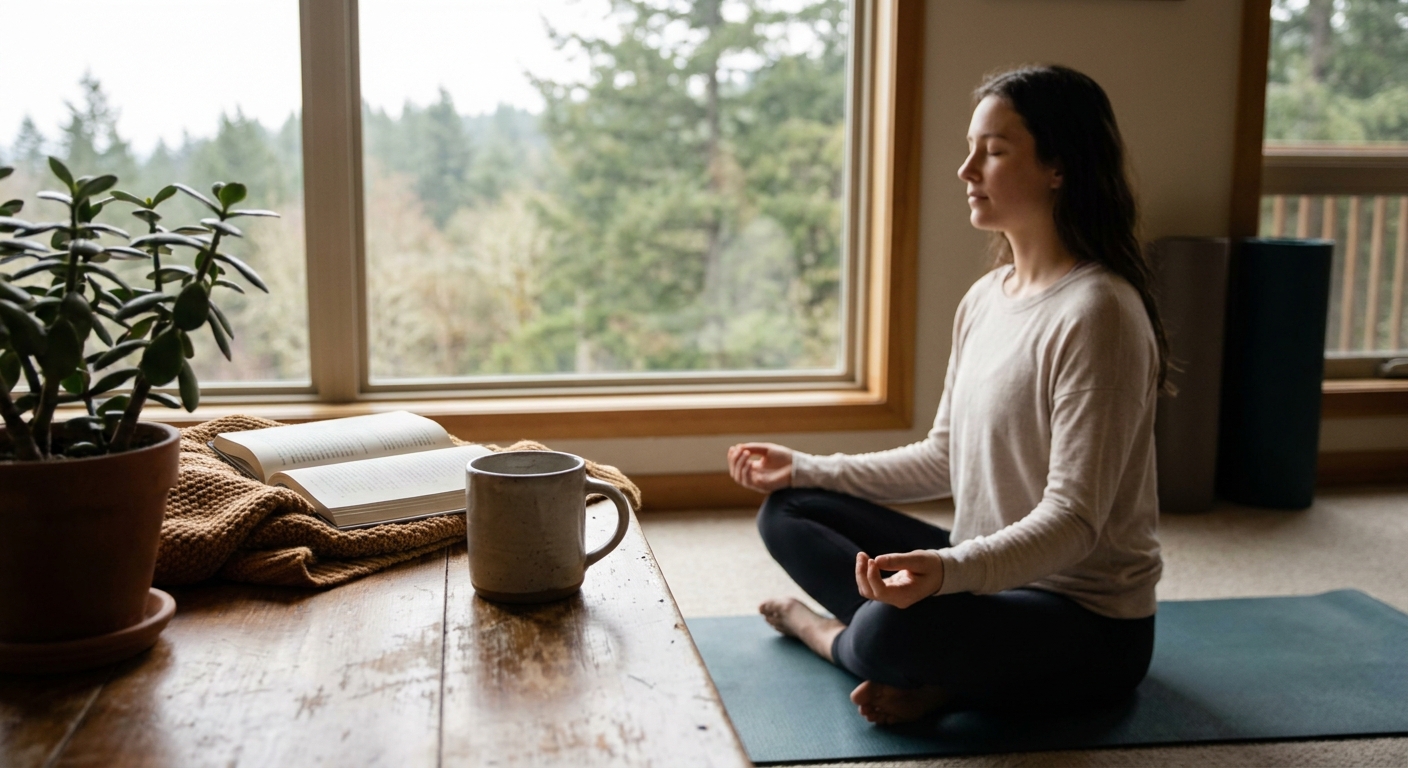
Chronic stress doesn't respond to one deep breath and a nice thought — it needs a technique you'll actually repeat, week after week, until your nervous system starts believing you're safe. This guide ranks the relaxation techniques for stress with the most consistent clinical support in 2026 and tells you which ones are worth your time.
- Diaphragmatic breathing at roughly 6 breaths per minute is the fastest way to lower a racing heart rate — adopt it daily.
- Progressive muscle relaxation works best for people who carry stress physically, in under 12 minutes a session.
- Mindfulness meditation needs 8 weeks of near-daily practice before the effects on chronic stress hold up — it’s a long game, not a quick fix.
- If a technique hasn’t moved your stress in 4-6 weeks of consistent use, that’s a signal to bring in a Registered Psychologist, not a signal to try harder alone.
Why this matters
Chronic stress isn't the same problem as a bad day. It's a nervous system stuck in a low-grade alarm state for weeks or months, and that state wears on sleep, relationships, and physical health long before most people connect the dots. Working with individuals and couples in Lethbridge, the same pattern shows up constantly: someone tries three or four relaxation techniques in a weekend, gets frustrated when none of them fix everything overnight, and gives up. That's the wrong test. The right question isn't "did this technique erase my stress," it's "did this technique lower my baseline enough, consistently, that I could function better this week than last week." People carrying chronic stress from work often need more than a breathing app — they need a technique matched to how their stress actually shows up, and sometimes they need a second set of eyes on the pattern itself.
How this list is ranked
Each technique below is ranked on three things: how quickly it produces a measurable physiological change, how much daily time it realistically demands, and how well it holds up for chronic (not acute) stress specifically. Techniques that only work for a single panic spike are marked accordingly, because chronic stress management and crisis de-escalation are not the same skill. Verdicts reflect what tends to stick for people managing ongoing stress in 2026, not what feels novel for a week.
The ranked list
1. Diaphragmatic breathing — the fastest reset
Slow, belly-based breathing at around six breaths per minute activates the vagus nerve and pulls the heart rate down within two to three minutes. It costs nothing, needs no equipment, and works in a car, a meeting, or a waiting room. The catch is that most people breathe shallowly from the chest under stress and need to actually practice the diaphragm mechanics before it works reliably under pressure. Do it for five minutes, twice a day, for two weeks before judging whether it's helping. Verdict: adopt daily.
2. Progressive muscle relaxation — the body-first approach
Progressive muscle relaxation (PMR) walks through roughly 16 muscle groups, tensing each for five seconds and releasing, in a full session that takes 10 to 12 minutes. It's built for people whose stress shows up as physical tension — clenched jaw, tight shoulders, shallow breath — rather than racing thoughts. PMR has decades of use in clinical settings specifically for chronic tension states, and it works well right before bed if stress is interfering with sleep. Verdict: adopt daily if tension is your main symptom.
3. Mindfulness meditation — the long game
Mindfulness-based practice needs roughly eight weeks of near-daily sessions, 15 to 20 minutes each, before it produces a measurable shift in baseline stress reactivity. That timeline turns a lot of people off in week two, when nothing feels different yet. The payoff is a durable change in how the brain responds to stress triggers, not just a temporary calm-down — which is exactly what chronic stress requires. Verdict: adopt daily, but commit to the full eight weeks before you evaluate it.
4. Guided imagery — the mental escape
Guided imagery walks the mind through a detailed sensory scene, engaging sight, sound, and touch to shift focus away from the stress trigger. Sessions run 10 to 15 minutes and work best paired with slow breathing rather than on their own. It's a solid secondary tool but rarely enough by itself for stress that's driven by an ongoing external situation, like a strained relationship or an unresolved conflict at work. Verdict: use as a supplement, not a standalone plan.
5. Grounding techniques (5-4-3-2-1) — the panic-attack rescue
Grounding through the senses — naming five things you see, four you can touch, three you hear, two you smell, one you taste — interrupts an acute spike fast, often in under two minutes. It's excellent for panic and acute overwhelm but does very little for the slow-burn stress that builds over months. If panic attacks are the actual driver of your stress, individual therapy for panic attacks addresses the pattern behind the spikes. Verdict: keep in your toolkit for acute moments, skip as a chronic-stress fix.
6. Physical movement — the free option
A brisk 20 to 30 minute walk lowers circulating stress hormones and produces effects that outlast most seated relaxation techniques by hours. It's the cheapest option on this list and needs zero instruction. The tradeoff is that it requires physical capacity and time most working parents and caregivers say they don't have — which is often the actual barrier, not motivation. Verdict: adopt daily, schedule it like an appointment.
7. Journaling — the after-hours processor
Structured journaling, 10 minutes a night naming the day's stress triggers and one thing within your control, reduces rumination that otherwise keeps the nervous system activated after the stressor has passed. It works especially well for people whose stress is relational or situational rather than purely physiological. Pairing it with self-care strategies for managing anxiety day-to-day builds a fuller routine. Verdict: adopt daily as a low-effort addition.
8. Cognitive reframing — the root-cause fix
Cognitive reframing, the core mechanism in CBT, targets the thought patterns that keep generating stress signals in the first place rather than just managing the symptom after it fires. It takes longer to learn well and generally works best with a therapist guiding the process, since most people can't spot their own distorted thinking patterns without a mirror. This is the technique with the strongest long-term evidence for chronic stress specifically, not just symptom relief. Verdict: adopt with professional guidance for lasting results.
“If a relaxation technique hasn’t lowered your baseline stress in four to six weeks of consistent use, the problem usually isn’t the technique — it’s what’s still generating the stress.”
Comparison table
| Technique | Time per session | Best for | Verdict |
|---|---|---|---|
| Diaphragmatic breathing | 5 minutes | Fast physiological reset | Adopt daily |
| Progressive muscle relaxation | 10-12 minutes | Physical tension, sleep | Adopt daily |
| Mindfulness meditation | 15-20 minutes | Long-term reactivity | Adopt (8-week commitment) |
| Guided imagery | 10-15 minutes | Supplementing breathwork | Use as needed |
| Grounding (5-4-3-2-1) | Under 2 minutes | Acute panic spikes | Keep for emergencies only |
| Physical movement | 20-30 minutes | Hormonal reset, mood | Adopt daily |
| Journaling | 10 minutes | Rumination, relational stress | Adopt daily |
| Cognitive reframing | Ongoing | Root-cause chronic stress | Adopt with guidance |
Where to start
Don't try to run all eight techniques at once — that's how people abandon the whole project by week two. Pick one physiological technique (breathing or PMR) and one processing technique (journaling or reframing), and run both for three weeks before adding anything else. If your stress is tied to a specific driver — a partner conflict, a caregiving role, a career transition — the technique will only take you so far without addressing that driver directly.
Not sure which stress is driving what
Talk it through with a Registered Psychologist in Lethbridge before picking a technique blind.
FAQ
What are the best relaxation techniques for stress in 2026?
Diaphragmatic breathing, progressive muscle relaxation, and mindfulness meditation have the strongest evidence for chronic stress in 2026. Breathing and PMR produce fast physical relief, while mindfulness needs about eight weeks of daily practice to change baseline reactivity.
How long does it take for relaxation techniques to reduce chronic stress?
Breathing and grounding techniques work within minutes for acute spikes, but chronic stress reduction takes four to eight weeks of consistent daily practice. If nothing has shifted by six weeks, the technique likely isn’t addressing the actual driver.
Is mindfulness meditation better than breathing exercises for stress?
They solve different problems. Breathing exercises calm the body fast within a single session; mindfulness meditation retrains long-term stress reactivity but needs roughly eight weeks of daily practice to show results.
Can relaxation techniques replace therapy for chronic stress?
Relaxation techniques manage symptoms but rarely address what’s generating the stress in the first place, especially when the driver is relational, financial, or work-related. If stress persists after four to six weeks of consistent practice, that’s usually a sign to bring in professional support.
What’s the fastest relaxation technique for a stress spike?
The 5-4-3-2-1 grounding technique works within about two minutes for an acute spike or panic response. It’s not built for chronic, ongoing stress, which needs a daily practice rather than a rescue tool.
How much time per day do relaxation techniques for stress require?
Most effective techniques take 5 to 20 minutes daily. Diaphragmatic breathing needs about 5 minutes twice a day, while mindfulness meditation and physical movement each need closer to 20 to 30 minutes for a measurable effect.
Do relaxation techniques work for stress caused by relationship conflict?
They lower physical tension but don’t resolve the underlying conflict. Ongoing relational stress usually needs a direct conversation or couples counselling alongside any relaxation practice, not instead of it.
When should I see a therapist instead of just using relaxation techniques?
See a therapist when stress persists past six weeks of consistent self-directed practice, or when it’s tied to a specific unresolved issue like conflict, grief, or a major life transition. A therapist can identify the driver a technique alone can’t touch.
One last thing
The technique that fails most often isn't on this list for a reason: white-knuckling through stress with willpower alone, hoping it resolves without a repeatable practice. The people who make real progress on chronic stress in 2026 pick one or two techniques from this list, run them daily for a full month, and treat a plateau as information rather than failure. If your stress is tied to something specific — a job, a relationship, a life change — checking whether it's time to see a therapist for anxiety is a faster path than cycling through apps.
Related guides