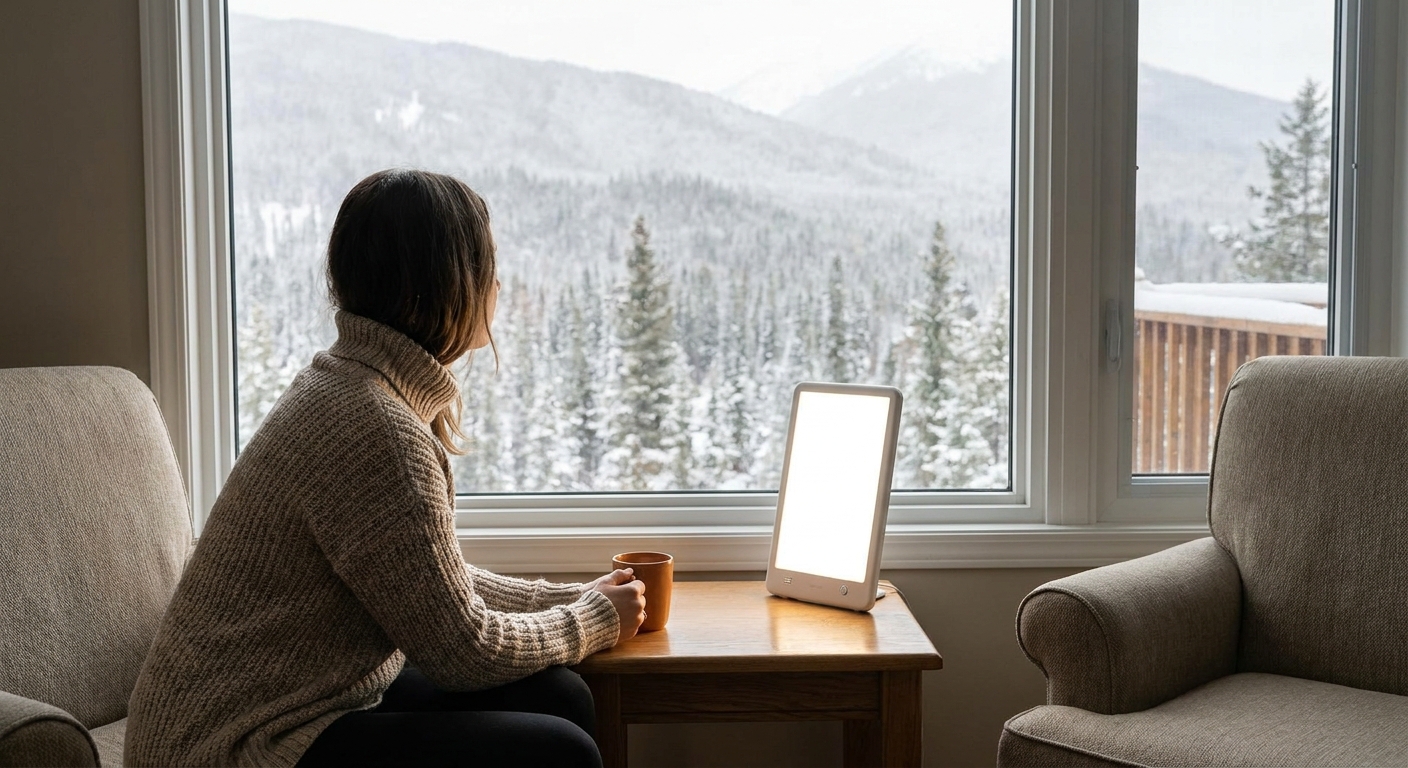
Winter in southern Alberta means short days, cold snaps, and for a meaningful share of the population, a real dip in mood that isn't just "winter blues." This guide ranks the coping strategies that actually make a difference for seasonal depression in Alberta, from light exposure protocols to when self-help stops being enough.
- Morning light exposure at 10,000 lux for 20-30 minutes is the single most-supported strategy for coping with seasonal depression in Alberta winters.
- Lethbridge averages roughly 8.5 hours of daylight in December, less than most of southern Canada realizes.
- Self-care routines help mild seasonal low mood but do not resolve moderate-to-severe symptoms lasting more than two weeks.
- If low mood, low energy, or hopelessness persist past two weeks, individual therapy for seasonal low mood is the next step, not a lamp upgrade.
Why this matters
Seasonal affective disorder isn't a mood you talk yourself out of by "getting outside more." The Canadian Mental Health Association estimates roughly 15% of Canadians experience some form of mild seasonal mood change, with 2-3% experiencing a more severe, clinically significant pattern each winter. In a city like Lethbridge, where daylight in December runs around 8.5 hours and temperatures regularly sit below minus 15, the gap between "low energy" and "seasonal depression" gets easy to miss.
I work with individuals across Lethbridge who come in every October and November asking the same question: is this normal winter tiredness, or something that needs treatment? The answer depends on duration, severity, and whether daily functioning is affected. That's the frame for the strategies below — some manage mild seasonal dips on their own, others signal it's time for individual therapy for seasonal low mood.
How this list is ranked
The strategies below are ordered by strength of evidence and how often they show up as durable fixes rather than short-term relief. Items near the top are backed by consistent clinical use for seasonal mood changes; items near the bottom are useful supports but not stand-alone treatment. Each one gets a plain verdict so you know whether to start it this week, keep it as a supplement, or treat it as a signal to book an appointment.
1. Morning light therapy — the highest-leverage fix
A light therapy box delivering 10,000 lux, used for 20 to 30 minutes within the first hour of waking, remains the most consistently effective non-medication intervention for seasonal low mood. It works by resetting the circadian signal that short winter days disrupt. Consistency matters more than intensity — daily use through December, January, and February beats occasional long sessions. Verdict: start this week.
2. Outdoor movement on chinook days
Lethbridge gets more chinook wind events than almost anywhere else in Alberta, and those warm spells can push temperatures up 15 to 20 degrees within hours. A 20-minute outdoor walk on those days does double duty: natural light exposure plus movement, both linked to mood regulation. The catch is that chinooks are unpredictable, so this can't be your only strategy. Verdict: use it, don't rely on it alone.
3. A fixed wake and sleep schedule
Seasonal depression disrupts sleep architecture more than people expect — either oversleeping or fragmented sleep. Holding a consistent wake time, even on weekends, stabilizes the same circadian rhythm that light therapy targets. This is a low-cost habit change, but it's also one of the easiest to abandon by January. Verdict: keep it non-negotiable through winter.
4. Scheduled social contact
Seasonal low mood pushes people toward isolation, which then deepens the low mood — a loop that shows up constantly in sessions from November through February. Pre-scheduling one social contact per week, rather than waiting until you feel like it, breaks that cycle before it sets in. It won't fix a clinical episode, but it prevents mild dips from compounding. Verdict: worth building into your week.
5. Vitamin D screening with your physician
Southern Alberta's latitude limits natural vitamin D synthesis from roughly October through March. A physician-ordered blood test, not a guess at a drugstore supplement dose, is the right move here — deficiency severity varies enough that self-dosing isn't reliable. This supports mood regulation but isn't a substitute for treating a diagnosed depressive episode. Verdict: check it, don't depend on it.
6. Daily self-care structure
A repeatable daily structure — meals at consistent times, a short outdoor break, one task completed before noon — reduces the drift that makes seasonal low mood feel bigger than it is. This is exactly the kind of routine covered in best self-care strategies for managing anxiety day-to-day, and it applies just as well to seasonal mood dips. It's a floor, not a ceiling. Verdict: good baseline, not a treatment plan.
7. Individual therapy when symptoms pass two weeks
When low mood, low energy, or loss of interest persists longer than two weeks and starts affecting work, sleep, or relationships, self-management strategies stop being enough on their own. That's the line I use with clients: two weeks of consistent symptoms is the signal to book, not wait out another month. If you're unsure where you land, how to know when to see a therapist for anxiety walks through the same threshold question for anxiety symptoms, and the logic transfers directly to seasonal depression. Verdict: this is the point to book, not delay.
Comparison table
| Strategy | Time to see effect | Effort | Verdict |
|---|---|---|---|
| Morning light therapy (10,000 lux) | 1-2 weeks | Low | Start this week |
| Outdoor movement on chinook days | Same day | Low, weather-dependent | Use when available |
| Fixed sleep schedule | 1-3 weeks | Medium | Keep non-negotiable |
| Scheduled social contact | 2-4 weeks | Medium | Build into routine |
| Vitamin D screening | Weeks (lab-dependent) | Low | Check, don't depend on |
| Daily self-care structure | Ongoing | Medium | Good baseline |
| Individual therapy | 4-8 sessions typical arc | Higher | Book past 2 weeks of symptoms |
Not sure if it’s more than winter blues?
Book an individual therapy session in Lethbridge and get a clear read on what’s going on.
Where self-help stops working
Three signals matter more than any lamp or routine:
- Symptoms persist longer than two weeks without improvement.
- Sleep, appetite, or concentration are noticeably disrupted, not just "off."
- You've lost interest in things that normally matter to you — work, relationships, hobbies.
Any one of these on its own is worth a conversation with a Registered Psychologist. All three together means self-care strategies alone are no longer the right tool.
FAQ
What is the best way of coping with seasonal depression in Alberta?
Daily morning light therapy at 10,000 lux for 20-30 minutes is the highest-leverage strategy for coping with seasonal depression in Alberta winters. Pair it with a fixed sleep schedule and scheduled social contact for the best results through 2026’s coldest months.
Is seasonal depression more common in Alberta than other provinces?
Alberta’s shorter winter daylight hours, especially in northern and central regions, make seasonal mood changes more noticeable than in provinces closer to the equator. Southern cities like Lethbridge get more sunshine hours overall thanks to chinook winds, which can soften but not eliminate the effect.
How long does seasonal depression usually last?
Seasonal depression typically follows the shortest-daylight months, often starting in October or November and easing by March or April. If symptoms extend beyond that window or worsen year over year, that’s a reason to seek individual therapy rather than wait it out again.
Does light therapy actually work for seasonal depression?
Yes, a 10,000 lux light box used for 20-30 minutes each morning is one of the most consistently supported non-medication interventions for seasonal mood changes. It works best used daily and started early in the season rather than after symptoms are already severe.
When should I see a therapist for seasonal low mood instead of managing it myself?
See a therapist once low mood, low energy, or loss of interest lasts more than two weeks and starts affecting work, sleep, or relationships. Self-care routines and light therapy help mild dips, but persistent symptoms need a structured treatment plan.
Can exercise alone fix seasonal depression?
Exercise, especially outdoors during daylight hours, supports mood regulation but rarely resolves a clinically significant seasonal depressive episode alone. It works best combined with light therapy and a consistent sleep schedule, not as a stand-alone fix.
Does vitamin D deficiency cause seasonal depression?
Vitamin D deficiency is common in Alberta winters and can contribute to low mood, but it is not the sole cause of seasonal affective disorder. A physician-ordered blood test is the right way to check levels rather than guessing at a supplement dose.
Is seasonal depression different from general depression?
Seasonal depression follows a predictable pattern tied to daylight and season, typically resolving as days lengthen in spring. General depression can occur year-round without that seasonal trigger, though the symptoms and treatment approaches overlap significantly.
One last thing
Lethbridge is one of the sunniest cities in Canada by total annual hours, largely because of chinook winds that regularly break up winter cold spells — but sunshine hours don't map cleanly onto daylight hours. A bright chinook afternoon in January still only gets you 8 to 9 hours of daylight total, which is exactly why light therapy protocols specify morning use: you can't bank enough natural light later in the day to compensate for what the season took from the morning.
Related guides
- Routines for managing depression symptoms at home
- Self-care strategies for managing anxiety day-to-day
- How to recognize signs of depression in yourself