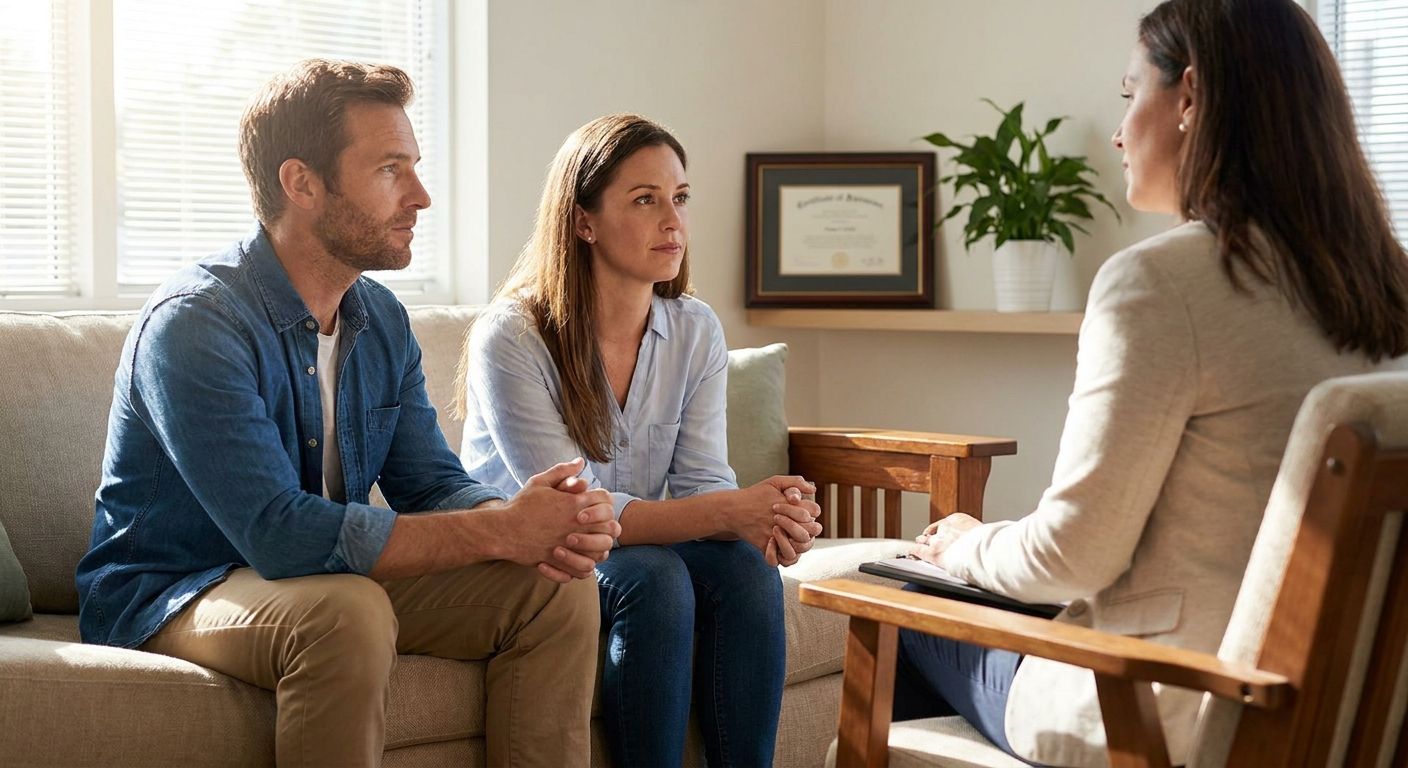
Miscarriage doesn't happen to one partner alone — it happens to the relationship, and couples counselling after miscarriage gives both of you a place to grieve it together instead of grieving past each other.
- Couples counselling after miscarriage works best when grief is treated as its own process, not a problem to fix fast.
- One partner wanting to talk and the other going quiet is common — book joint sessions, not sessions instead of each other.
- Individual therapy for grief and loss is worth starting first if one of you isn’t ready for a joint room yet.
- Skip any approach that jumps straight to "try again" before either of you has actually grieved the pregnancy you lost.
Why this matters
Miscarriage grief is strange grief. There's often no funeral, no shared ritual, and sometimes no one outside the relationship who even knew a pregnancy existed. That leaves two people carrying loss with nowhere to put it except onto each other.
In my practice in Lethbridge, I see this pattern constantly: one partner wants to talk about it every day, the other wants to move forward and stops mentioning it, and both read the other's coping style as a lack of caring. Learning how to support a partner who's grieving a loss is usually the first practical skill couples need before anything else, and it's often the gap that couples counselling after miscarriage is actually closing.
This mismatch doesn't mean the relationship is in trouble in 2026 the way it might look from the outside. It means grief runs on two different clocks in the same house, and that needs a structure — not just time.
Who this is for
This is for couples in Lethbridge and southern Alberta who've lost a pregnancy in the past several months and feel like they're managing it separately instead of together. It's for partners where one is still bringing it up and the other has gone quiet, or where the loss has started showing up as irritability, distance, or arguments that seem to be about something else entirely. It's also for couples who are simultaneously facing the question of whether and when to try again, which adds pressure on top of grief that hasn't finished yet.
What to look for in couples counselling after a miscarriage
A grief-informed approach, not conflict resolution first
A counsellor who jumps straight to communication scripts or fair-fighting rules before naming the loss itself is treating a grief problem like a conflict problem. The arguing is usually the symptom, not the starting point, and skipping past the loss to manage behavior rarely holds.
Room for two different grief timelines in the same room
One partner processing out loud and the other processing internally is normal, not a red flag. The right approach makes space for both without forcing either person into the other's pace.
Language that doesn't rush past the loss
Phrases like "at least it happened early" or "you can try again" shut down grief instead of making room for it, even when they're meant kindly. What's said in early sessions sets the tone for whether either partner feels safe naming what actually happened.
A plan for the practical questions underneath the grief
Many couples are grieving and deciding whether to try again at the same time, and that decision carries its own pressure separate from the loss itself. Counselling that only addresses the emotional side while ignoring the "what next" conversation leaves that pressure to build on its own.
Flexible pace and format
Some couples want weekly sessions right away; others need a few weeks before either person can talk about it out loud. In-person sessions in Lethbridge work for some couples, virtual sessions work better for others juggling work schedules or simply not wanting to leave the house yet in 2026's colder months.
“Grief doesn’t move at the same speed for both partners, and that’s not a sign your relationship is broken.”
Where to start, depending on what's going on between you two
If deciding whether to try again is adding pressure on top of grief: couples counselling for infertility and family planning stress is built for exactly this overlap — grieving a loss while also facing a decision about the future. Couples in this spot often feel like they can't fully grieve because the next decision is already looming. Book this first if the "what next" question is louder than the grief itself right now.
If one of you isn't ready to sit in a joint session yet: starting with individual therapy for grief and loss gives that partner a private space to process before adding a second person to the room. This isn't a step backward from couples counselling after miscarriage — it's often what makes the joint sessions actually work once you get there. Start here, then add couples sessions, rather than waiting for both of you to feel ready at the same time, which rarely happens on its own.
If the grief has turned into arguments about everything except the loss itself: naming that directly with a counsellor, using a relationship-conflict-focused approach, matters more than trying to talk it out at home for the fifth time. Recurring fights about chores or schedules that started right after a miscarriage are usually grief wearing a different costume. Worth raising directly in your first session rather than treating it as a separate problem.
Ready to talk to someone together?
Individual and couples sessions with a Registered Psychologist in Lethbridge.
What to avoid
- Waiting for "the right time" to book. Grief after a miscarriage doesn't pause for a more convenient month, and couples who wait for things to calm down on their own often wait through 2026 without much changing.
- A counsellor who treats it as a fertility problem to solve rather than a loss to grieve. Medical follow-up and emotional processing are two different tracks, and collapsing them into one conversation about "next steps" skips the grief entirely.
- Treating individual therapy as a permanent substitute for joint sessions. Individual work is a strong starting point when one partner isn't ready, but if the relationship itself is straining, that needs its own dedicated space eventually, not indefinitely deferred.
Which path fits
| Path | Best for | Pace | Verdict |
|---|---|---|---|
| Couples counselling together from week one | Both partners ready to talk, lower conflict | Weekly, 45-60 minute sessions | Right fit for most couples |
| Individual therapy first, couples later | One partner withdrawn or overwhelmed | Individual sessions until ready, then joint | Start here if readiness is unequal |
| Family-planning-focused couples work | Also deciding whether to try again | Runs alongside grief work | Add this when the "what next" question won't quiet down |
FAQ
What is couples counselling after miscarriage?
Couples counselling after miscarriage is joint therapy focused on grieving a pregnancy loss as a shared experience rather than two separate ones. Sessions typically address mismatched grief timelines, communication breakdown, and decisions about trying again.
How soon after a miscarriage should couples start counselling?
There’s no required waiting period, and starting within weeks of the loss is common and appropriate. Some couples wait until conflict has built up first, but earlier support usually prevents that buildup rather than just addressing it later.
Can one partner start individual therapy while the other isn’t ready for couples counselling?
Yes, and this is a common starting point when one partner needs private space before joining sessions together. Individual therapy for grief and loss can run first, with couples sessions added once both partners are ready.
Is couples counselling after miscarriage covered by insurance in Alberta?
Coverage depends on your extended health plan and whether it includes sessions with a Registered Psychologist. Check directly with your provider for the specifics of your plan.
What’s the difference between grief counselling and couples counselling after miscarriage?
Grief counselling typically works with one person on their individual loss, while couples counselling after miscarriage focuses on how the loss is affecting the relationship itself. Many couples use both, often starting with one and adding the other.
Does virtual couples counselling work for grief after a miscarriage?
Yes, virtual sessions work well for grief-focused couples work, especially for couples juggling work schedules or who aren’t ready to be in a waiting room in the weeks after a loss. The format matters less than starting the conversation.
How do you know if you need counselling or if you’ll work through a miscarriage on your own?
If one of you feels alone in the grief, if conversations about it keep turning into arguments, or if it’s been months and the topic still can’t come up without tension, that’s a sign counselling would help. Couples who are grieving in sync with open communication may not need it, but that’s less common than people expect.
One last thing
Miscarriage grief often resurfaces around the original due date or on the anniversary of the loss, sometimes months after either partner thought they'd moved past it. If that happens in 2026 and it feels like a setback, it isn't one — it's a normal part of how this kind of loss works, and it's not too late to book a session even if the miscarriage happened a year ago.
Related guides
- How to know if you and your partner need couples counselling
- Therapy for postpartum anxiety in new mothers