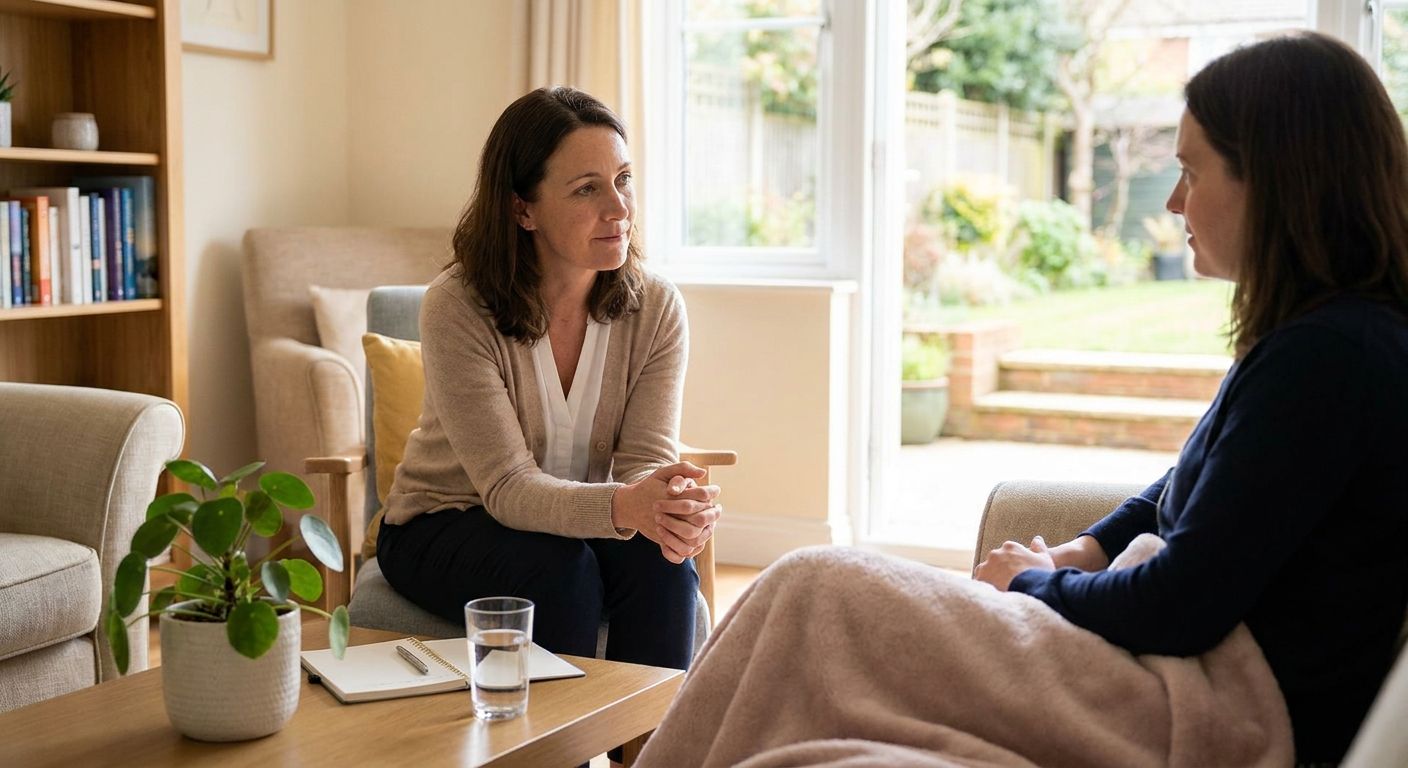
Living with chronic pain or an ongoing illness changes how you carry stress, and generic anxiety advice rarely accounts for a body that doesn't cooperate on your schedule. This guide breaks down what individual therapy for chronic pain and ongoing illness actually needs to include, who it's built for, and which parts of Brandon Boorsma Counselling's practice apply to your situation in 2026.
- Therapy for chronic pain works best when it treats fatigue, flare-ups, and grief together, not anxiety alone.
- Brandon Boorsma Counselling in Lethbridge paces sessions around flare-ups instead of a fixed weekly script. Consider it.
- Couples counselling matters when illness strains a relationship, not just the person carrying the diagnosis.
- Skip generic relaxation apps if they ignore medical trauma; a Registered Psychologist reads the full picture.
- Most clients notice shifts within 8 to 12 sessions once pacing matches their actual energy levels.
Why this matters
Chronic pain and ongoing illness don't just hurt physically – they reorganize identity, work, and relationships around what your body can tolerate that week. Standard anxiety or depression protocols often assume a stable baseline you don't have, which is why generic advice falls flat for this group.
Individual therapy for chronic pain needs to hold two things at once: the psychological weight of an unpredictable condition, and the practical reality of flare-ups that don't respect appointment times. Individual therapy for health anxiety and chronic illness starts from that premise rather than treating pain as background noise to a separate anxiety diagnosis.
2026 hasn't changed the basic clinical definition: pain that persists past three months moves from acute to chronic, and the mental load compounds the longer it goes untreated.
Who this is for
This is for adults in Lethbridge and southern Alberta managing a diagnosis that isn't going away in a season – autoimmune conditions, fibromyalgia, chronic back pain, or long recovery from a health crisis. It's for anyone whose last therapist kept handing them relaxation scripts written for someone whose stress ends when the meeting is over.
What to look for in therapy for chronic pain and ongoing illness
A therapist who treats the body as part of the picture, not a footnote
Chronic pain therapy fails fast when a clinician only asks about mood and skips the physical reality driving it. A Registered Psychologist who understands how the nervous system amplifies pain signals over time can separate what's medical from what's psychological instead of guessing.
Flexibility built around flare-ups
A rigid weekly slot doesn't work when a flare can flatten you for three days. Look for a practice that reschedules without friction and doesn't treat a missed session as noncompliance.
Room to grieve the life you had before
Ongoing illness often means grieving abilities, plans, or a version of yourself that existed before diagnosis. Therapy that jumps straight to coping skills without acknowledging that loss tends to feel hollow within a session or two.
A plan for how the illness is landing on people around you
Chronic conditions rarely stay contained to one person. If a partner is absorbing caregiving duties or resentment is building, couples counselling for chronic illness affecting a relationship becomes part of the plan, not an afterthought.
Realistic pacing over a fixed program length
Some conditions stabilize in 8 sessions; others need ongoing check-ins for a year or more. A therapist who commits to a rigid 12-week package regardless of how you're actually doing is optimizing for a calendar, not your recovery.
The right pathway depends on what's straining
Individual sessions focused on the diagnosis itself. The core option for most people starting out – sessions with a Registered Psychologist that address health anxiety, pain-related fear, and the daily fatigue of managing symptoms. Sessions run 50 minutes and typically start weekly before spacing out. Consider this first if you haven't had focused support since diagnosis.
Relationship support when the illness reshapes the partnership. The overlooked add-on – couples counselling for chronic illness targets caregiver burnout and resentment that individual work alone won't touch. If a partner has taken on more than half the household load since diagnosis, this belongs in the plan. Consider adding this once individual sessions are underway.
Support specifically for adjusting after a new or changed diagnosis. The reset option – built for the first 6 to 12 months after a diagnosis shifts, when a couple is renegotiating roles and expectations in real time; see how to navigate a relationship after a major health diagnosis. Book this if the diagnosis is under a year old.
Generic stress-management workshops. The tempting shortcut – broad relaxation content looks helpful but rarely addresses medical trauma or flare-up-specific fear. Skip this as a standalone plan; use it only alongside individual therapy for chronic pain, not instead of it.
Book an individual therapy session
Sessions with a Registered Psychologist in Lethbridge, in person or virtual.
What looks helpful but isn't
- Wellness apps built for general stress. They ignore the fear-avoidance cycle specific to chronic pain, where guarding against movement often makes pain worse over time.
- One-size-fits-all CBT worksheets. Standard anxiety scripts assume a baseline of health that doesn't exist here; they need adapting, not applying as-is.
- Therapy that stops at "just relax." Pain-related anxiety needs skills for flare-up moments specifically, not a relaxation track borrowed from unrelated stress management.
Comparison at a glance
| Option | Best for | Typical session length | Verdict |
|---|---|---|---|
| Individual therapy for chronic illness | Ongoing symptom and health anxiety management | 50 minutes | Buy |
| Couples counselling for chronic illness | Relationship strain from caregiving or role shifts | 50 minutes | Consider |
| Post-diagnosis relationship support | First 6-12 months after a new diagnosis | 50 minutes | Consider |
| Generic wellness workshops | Light stand-alone stress reduction | Varies | Skip |
FAQ
Is therapy for chronic pain covered by insurance in Alberta?
Coverage depends on your extended health plan, since psychologist benefits vary widely by policy in 2026. Check your provider’s coverage limits for a Registered Psychologist before booking.
What’s the difference between therapy for chronic pain and general anxiety therapy?
Chronic pain therapy addresses fear-avoidance cycles and medical trauma specific to a diagnosis, not just anxious thought patterns. General anxiety protocols often miss the physical triggers driving the fear.
How many sessions does chronic pain therapy typically take?
Most clients notice shifts within 8 to 12 sessions once pacing matches their energy levels. Ongoing conditions often benefit from continued monthly check-ins after that initial stretch.
Can couples counselling help when one partner has a chronic illness?
Yes, especially when caregiving duties or resentment have reshaped the relationship since diagnosis. Individual therapy alone often can’t resolve strain that’s playing out between two people.
Is virtual therapy available for chronic pain management?
Virtual sessions suit flare-up days when travel is hard, and many practices offer them alongside in-person options. Ask when booking whether virtual individual sessions fit your situation.
Does therapy actually reduce chronic pain, or just help with coping?
Therapy addresses the psychological amplification of pain and improves day-to-day function; it isn’t a cure. Reduced anticipatory anxiety around flare-ups is often the first measurable change.
What should I bring to a first session for chronic pain therapy?
Bring a rough timeline of your diagnosis and a sense of which activities the pain currently limits. A short list of triggers or flare patterns helps the first session move faster.
Is a Registered Psychologist different from a general counsellor for this kind of work?
Yes, a Registered Psychologist carries specific clinical training and regulatory oversight that a general counsellor title doesn’t guarantee. That distinction matters more when medical trauma is part of the picture.
One last thing
The flare-up itself is often not what triggers the worst anxiety – it's the fear of the next one. Sessions that specifically rehearse a flare-up response plan tend to cut anticipatory anxiety faster than general relaxation training, because they target the actual fear instead of a vague sense of stress.
Related guides