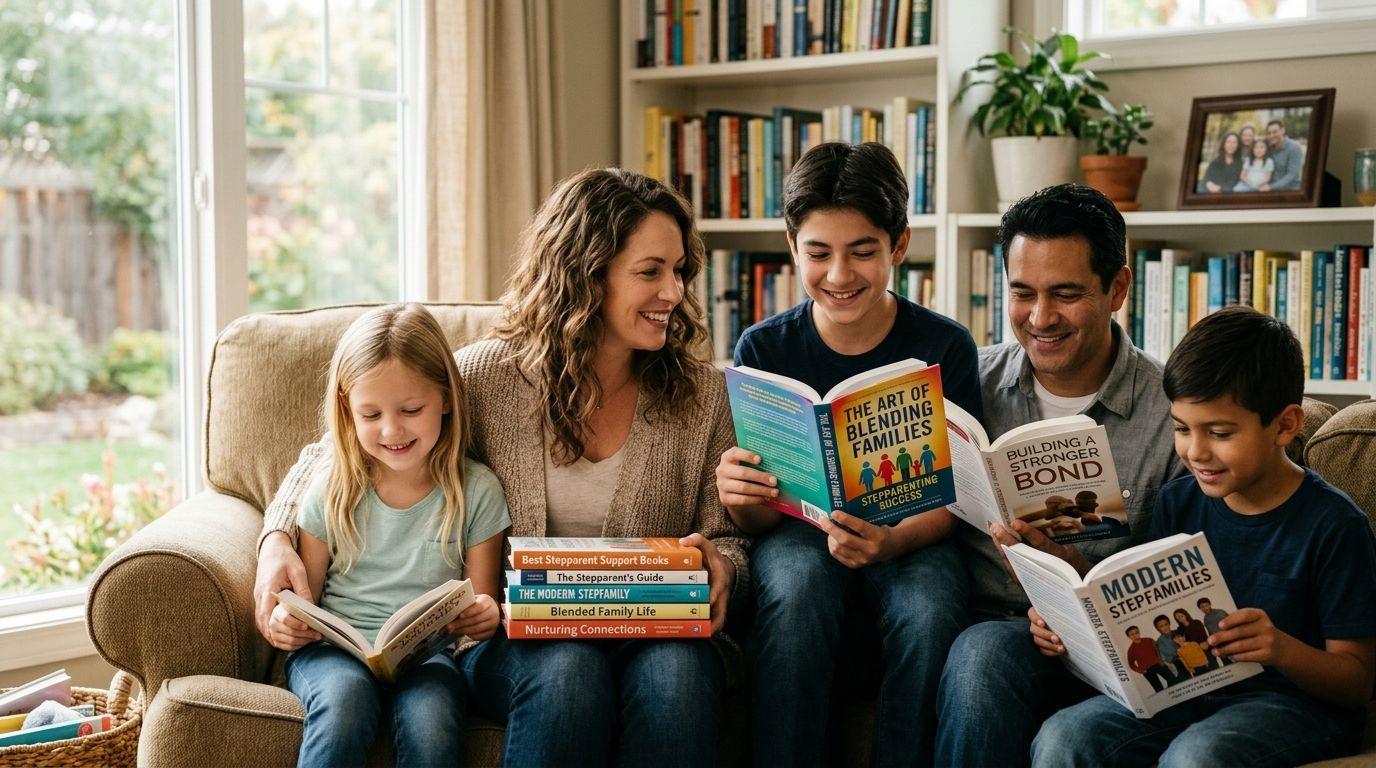
Blended family stress hits differently than first-marriage conflict, and most marriage books don't touch it. Best overall: The Smart Stepfamily by Ron L. Deal. Best for stepmothers: Stepmonster by Wednesday Martin. Best for couples who want research behind the advice: Surviving and Thriving in Stepfamily Relationships by Patricia Papernow. Best budget option: The Enlightened Stepmother by Perdita Kirkness Norwood.
- The Smart Stepfamily by Ron L. Deal is the best stepparent support book overall for 2026 — practical, structured, and written for both partners.
- Stepmonster by Wednesday Martin is the sharpest pick for stepmothers navigating resentment and role confusion.
- Surviving and Thriving in Stepfamily Relationships by Patricia Papernow carries the most clinical weight — it’s written by a psychologist who specializes in stepfamilies.
- Stepcoupling by Susan Wisdom and Jennifer Newman Green focuses on protecting the marriage itself, not just parenting logistics.
- No book replaces a therapist when conflict is chronic — reading and couples counselling work best together.
Why this matters
Stepfamilies face pressures that first-marriage books often miss: unclear parenting roles, loyalty conflicts between children and the new adult in the home, and expectations that bonding should happen quickly. A good book won't fix a household in crisis, but it gives language for problems that otherwise feel personal and isolating.
If you're already past the reading stage and the conflict is active — arguments about discipline, a kid who won't accept a stepparent, resentment building between partners — couples counselling for blended families addresses the pattern directly rather than waiting for a book to land at the right moment. For a broader shelf on parenting specifically, the companion guide on books on blended family parenting covers titles focused more on the kids than the couple relationship.
What makes the best stepparent support books
- Written for the stepparent's actual experience — not generic parenting advice repurposed with a new label.
- Addresses the marriage, not just the kids — a strong number of stepfamily books skip the couple relationship entirely.
- Grounded in research or clinical practice — author credentials matter more here than in most self-help categories.
- Practical scripts and steps, not just validation that the situation is hard.
- Covers the timeline honestly — most clinicians say full stepfamily integration takes years, not months, and a credible book says so.
- Distinguishes stepmother and stepfather experiences — the two roles carry different social pressure and deserve separate treatment.
Best stepparent support books at a glance
| Book | Best for | Standout feature | Key limitation |
|---|---|---|---|
| The Smart Stepfamily (Ron L. Deal) | Overall / both partners | Seven-step structure covering finances, discipline, and ex-relationships | Written from a faith-informed lens some readers won't want |
| Stepmonster (Wednesday Martin) | Stepmothers | Names the resentment and isolation directly, backed by interviews | Less useful for stepfathers or the biological parent |
| Surviving and Thriving in Stepfamily Relationships (Patricia Papernow) | Research-minded couples | Written by a clinical psychologist specializing in stepfamilies | Denser and more academic than the others |
| Stepcoupling (Susan Wisdom & Jennifer Newman Green) | Protecting the marriage | Frames the couple bond as the foundation, kids second | Lighter on day-to-day parenting scripts |
| The Enlightened Stepmother (Perdita Kirkness Norwood) | Quick, budget-friendly read | Short chapters, easy to finish in a weekend | Less depth than the clinical options above |
1. The Smart Stepfamily: best stepparent support book for both partners
Ron L. Deal built this book around a seven-step framework that walks couples through discipline, finances, ex-spouse dynamics, and the emotional timeline of stepfamily bonding. It's the most commonly recommended title in this category because it doesn't assume the reader is only a stepmother or only a stepfather — it addresses the couple as a unit.
The Smart Stepfamily pros:
- Covers the full range of stepfamily friction points, not just parenting
- Structured chapters make it easy to read one topic at a time
- Widely cited by family therapists working with blended households
The Smart Stepfamily cons:
- The faith-based framing running through parts of the book won't fit every reader
- Some sections read as more prescriptive than research-driven
Best for: couples who want one comprehensive book instead of piecing advice together from several sources.
Verdict: Buy if you want the single most complete starting point for 2026.
2. Stepmonster: best for stepmothers navigating resentment
Wednesday Martin's book is built almost entirely around the stepmother experience — the guilt, the comparison to the biological mother, and the social pressure to love a stepchild instantly when that feeling often takes years to develop, if it arrives at all. It's less a how-to guide and more a permission slip to feel what you actually feel.
Stepmonster pros:
- Directly validates emotions most stepmothers are told not to admit to
- Draws on interviews and research rather than pure opinion
- Reduces the isolation that comes with stepmother-specific guilt
Stepmonster cons:
- Offers less concrete, step-by-step guidance than The Smart Stepfamily
- Not written with the stepfather's experience in mind at all
Best for: stepmothers who feel like something is wrong with them for not bonding instantly with a stepchild.
Verdict: Buy if you're the stepmother in the house and feeling isolated in that role.
3. Surviving and Thriving in Stepfamily Relationships: best research-backed option
Patricia Papernow has spent decades specializing in stepfamily clinical work, and this book reads like it. It leans on developmental research about how stepfamilies actually integrate over time, which is slower and messier than most couples expect going in. If you want the advice grounded in something more than personal anecdote, this is the pick.
Surviving and Thriving pros:
- Written by a psychologist with a specific clinical focus on stepfamilies
- Explains the realistic timeline for stepfamily bonding rather than promising a quick fix
- Useful for couples who also see a therapist and want the same framework
Surviving and Thriving cons:
- Denser prose than the other titles on this list
- Less quick-reference-friendly for a reader wanting fast, practical scripts
Best for: couples who want the clinical reasoning behind the advice, not just the advice itself.
Verdict: Buy if you're the type of reader who wants the "why" as much as the "what to do."
4. Stepcoupling: best for protecting the marriage itself
Susan Wisdom and Jennifer Newman Green take a different angle than most stepfamily books: the marriage comes first, and a stable marriage is what eventually stabilizes the household. Their argument is that couples who organize their whole life around the kids' adjustment often end up with a fractured marriage and kids who still don't adjust.
Stepcoupling pros:
- Reframes the couple bond, not the kids, as the priority to protect first
- Direct about how much stepfamily strain lands on the marriage specifically
- Good complement if you've already read a parenting-focused stepfamily book
Stepcoupling cons:
- Lighter on day-to-day discipline and parenting scripts than Deal's book
- Assumes both partners are equally willing to prioritize the marriage, which isn't always true early on
Best for: couples where the relationship itself, not just the kids, is under strain.
If that describes where you're at, dealing with anxiety about becoming a stepparent is worth reading alongside this one — the anticipatory anxiety before the role even settles in is common and treatable on its own.
Verdict: Buy if the marriage, not the parenting logistics, is where the strain is showing up.
5. The Enlightened Stepmother: best short, budget-friendly read
Perdita Kirkness Norwood's book is shorter and more conversational than the clinical options above. It won't replace Papernow's research depth or Deal's structured framework, but it's the fastest of the five to actually finish, which matters if you're the type of reader who buys stepfamily books and never gets past chapter two.
The Enlightened Stepmother pros:
- Short chapters that fit into a busy week
- Approachable tone for readers newer to the stepparent role
- Good entry point before moving to denser titles
The Enlightened Stepmother cons:
- Less depth than the clinical or research-backed options on this list
- Covers less ground on the couple relationship specifically
Best for: a reader who wants something finishable this month, not a long-term study project.
Verdict: Buy as a starting point, then move to a deeper title once you've got the basics down.
How this list was ranked
Each title was weighed against the six criteria above: whether it addresses the stepparent's actual lived experience, whether it treats the marriage as its own topic, whether the advice is grounded in research or clinical practice, how practical the guidance is, whether it's honest about the multi-year timeline, and whether it distinguishes stepmother and stepfather experiences instead of blending them. The Smart Stepfamily ranked highest because it's the only one that scores well across all six; the others earn their spot by doing one thing especially well.
“Full stepfamily integration typically takes years, not months — any book that promises faster than that is selling something.”
Which stepparent support book should you choose?
Start with The Smart Stepfamily if you want one book that covers the whole picture — discipline, finances, and the marriage together. Add Stepmonster if you're the stepmother and feel like the guilt is yours alone to carry. Reach for Surviving and Thriving in Stepfamily Relationships if you want the clinical reasoning behind the advice, and pick up Stepcoupling if the marriage itself, more than the parenting logistics, is where the cracks are showing.
Books help most when the household is stressed but functional. When arguments are recurring and neither partner feels heard, that's a different problem than a book solves — the strategies to reduce conflict in blended families guide breaks down what to try before or alongside professional support.
Talk through blended family conflict
Couples counselling for blended families with a Registered Psychologist in Lethbridge.
FAQ
What is the best stepparent support book overall in 2026?
The Smart Stepfamily by Ron L. Deal is the most complete option in 2026 because it covers discipline, finances, and the marriage together in one structured framework, rather than focusing on a single piece of the stepfamily experience.
Is Stepmonster better than The Smart Stepfamily?
They serve different purposes: Stepmonster focuses specifically on the stepmother’s emotional experience, while The Smart Stepfamily covers the whole household including discipline and finances. A stepmother feeling isolated may get more immediate relief from Stepmonster; a couple wanting a full framework should start with The Smart Stepfamily.
How much does a stepparent support book cost?
Prices vary by retailer and format, so check current listings on the retailer or library site you’re using rather than relying on an outdated figure.
Are stepparent support books enough on their own?
Books help when the household is stressed but functional and both partners are willing readers. When conflict is recurring or a partner feels unheard, working with a couples counsellor addresses the pattern directly instead of waiting for a book to land at the right moment.
What’s the best stepparent support book for stepfathers specifically?
Most titles in this category, including Stepmonster, are written primarily for the stepmother experience. The Smart Stepfamily is the most balanced option for stepfathers since it addresses the couple as a unit rather than one role exclusively.
How long does it take a blended family to feel normal?
Clinical literature on stepfamilies, including Patricia Papernow’s research, points to a multi-year integration timeline rather than months. Any resource promising a quick fix is oversimplifying a process that takes sustained effort from both partners.
Should both partners read the same stepparent book?
Yes — the strongest results come from both partners reading the same material so they’re working from a shared vocabulary for discipline roles, loyalty conflicts, and the marriage itself, rather than one partner absorbing the framework alone.
What should I read if my stepfamily conflict is already severe?
Books are a supplement, not a replacement, for professional support once conflict is chronic or a partner feels unheard session after session. Couples counselling addresses the specific pattern in your household rather than general advice written for a broad audience.
One last thing
The most-cited detail across stepfamily clinical literature, including Papernow's work, is that full integration is measured in years, not months — couples who expect a first-marriage timeline for bonding are the ones most likely to feel like they're failing. Pick one book, finish it, and if the conflict stays active after you try its exercises, bring in a third party rather than buying a fifth book.
Related guides
- Strategies to reduce conflict in blended families
- Premarital counselling for couples blending families
Leave a Reply