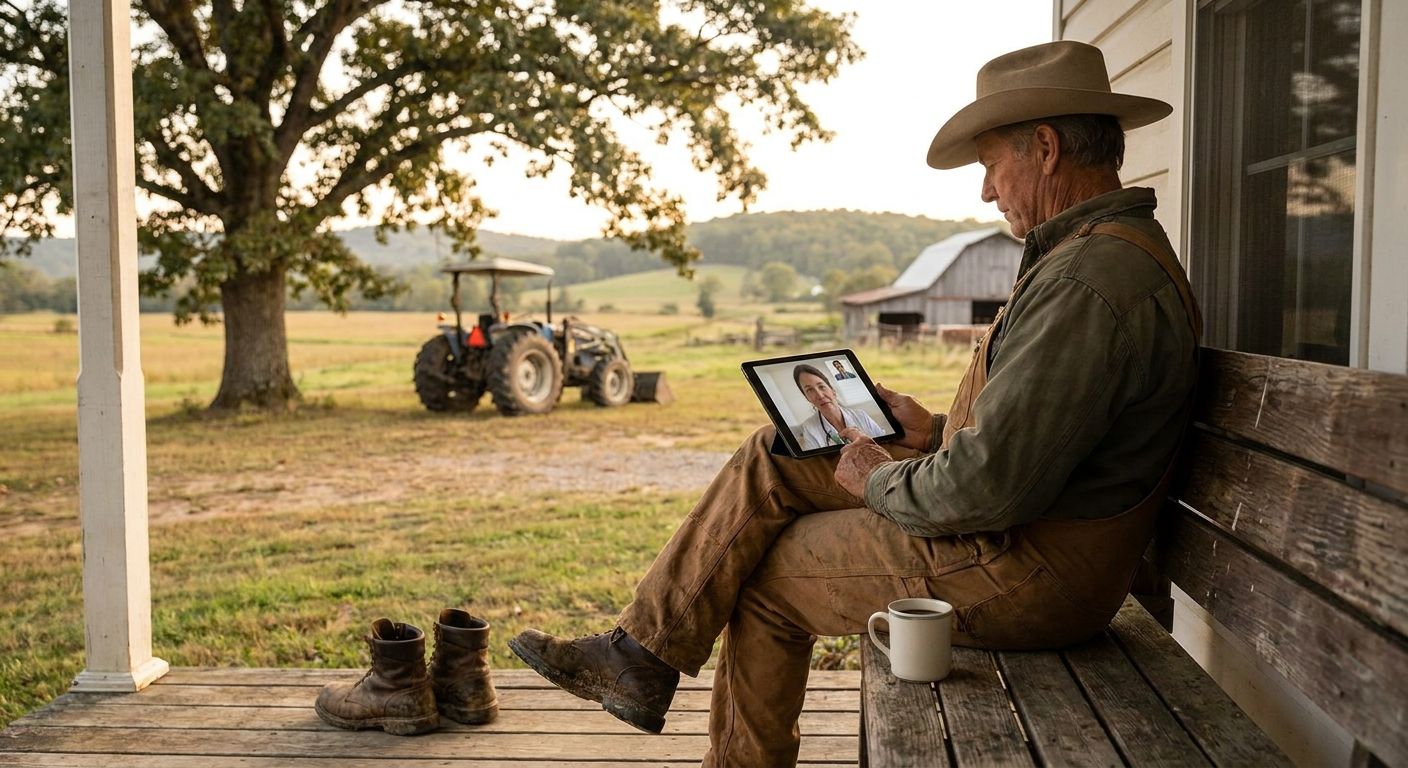
Calving doesn't pause for a Tuesday afternoon appointment, and neither does seeding or harvest. If you farm or ranch in southern Alberta and you've decided therapy might help, the real question in 2026 isn't whether you need it — it's how you fit it into a schedule with no gaps in it.
- Therapy for a busy farming schedule works when you book around seasonal lulls, not against the calendar you already have.
- Virtual sessions turn a 90-minute round trip into a 50-minute block you can take from the shop office or the truck.
- A standing biweekly slot beats a floating one you renegotiate every week during calving or harvest.
- Brandon Boorsma Counselling runs virtual and in-person sessions from Lethbridge for farmers and ranchers whose hours don’t match a 9-to-5 clinic.
Why this matters
Farming and ranching schedules don't bend for appointments the way office jobs do. Weather moves a planting window by three days and the whole week reorganizes itself. That's exactly why therapy gets pushed to "after harvest" every single year, and "after harvest" quietly becomes never.
The stress doesn't wait for a slow season, though. Financial pressure, equipment breakdowns, isolation, and marriage strain from two people running a business and a household off the same forty acres compound while you're too busy to deal with any of it. Fitting individual therapy for farmers and ranchers into a working season is a scheduling problem first and a mental health decision second — solve the logistics and the rest follows.
What you'll need
- A phone or laptop with a stable connection somewhere on the yard, in the truck, or in the house
- A private spot for 50 minutes — the shop office, a parked truck, or a quiet room works
- A rough map of your year: calving window, seeding, spraying, haying, harvest, shipping
- Two or three recurring low-demand stretches you can name off the top of your head
- A willingness to reschedule once instead of cancelling and letting it drop
If your spouse is part of the stress you're carrying, couples counselling built for farming and ranching families covers the same scheduling problem from two calendars instead of one.
The steps
1. Map your season before you book anything
Write down the six or eight weeks a year when your labor demand actually spikes — calving, seeding, spraying, haying, harvest, shipping. Everything else is negotiable time, even if it doesn't feel like it. Knowing the true crunch windows, not the vague sense that "it's always busy," is what makes the next steps possible. Common mistake: treating the whole year as equally packed and concluding there's no time at all.
2. Pick a standing time slot, not a floating one
A recurring Wednesday at 4 p.m. survives busy seasons better than "I'll book when things settle down." Individual therapy for farmers and ranchers in southern Alberta works on a cycle of every two to three weeks for most people, which is far easier to protect as a fixed slot than as something you renegotiate weekly. Common mistake: booking session-by-session, which turns every single appointment into a fresh decision you can talk yourself out of.
3. Default to virtual sessions during peak months
A 50-minute video session from the shop office replaces a 90-minute round trip into Lethbridge and back. During calving or harvest, that's the difference between keeping the appointment and skipping it. Virtual counselling for busy schedules exists for exactly this — sessions that fit around a day that won't stop for you. Common mistake: assuming virtual sessions are a lesser version of in-person work rather than a format switch that keeps you consistent.
4. Build a one-reschedule rule instead of a cancellation habit
Give yourself permission to move a session once when a cow calves at the wrong time or the combine breaks down mid-field. What you don't get to do is cancel and leave it unscheduled. Rebooking within the same week keeps the rhythm intact even when the day itself falls apart. Common mistake: cancelling without rebooking, which is how a two-week gap turns into a two-month gap.
5. Loop in your partner if the stress touches the marriage too
Money conflict, exhaustion, and long stretches of parallel work instead of partnership show up on the ranch as much as anywhere. If the tension is between you and your spouse rather than just inside your own head, book that conversation directly rather than trying to solve a two-person problem in an individual session. Common mistake: assuming individual therapy will fix relationship strain it was never built to address.
6. Treat the first session as information gathering, not commitment
One appointment doesn't obligate you to a set number of sessions or a particular schedule going forward. It gives you and the therapist a read on what's actually going on and what pace makes sense given your operation's calendar. Common mistake: skipping the first session because you're not sure you'll "keep it up," when the first session is precisely where that gets figured out.
7. Protect the last 10 minutes before you go back to work
Walking straight from a session about grief, marriage strain, or burnout back into fixing fence line doesn't give anything time to settle. Ten minutes in the truck before you pick the next task back up matters more than it sounds like it should. Common mistake: scheduling therapy back-to-back with the next demanding task on your list.
Book around your season, not against it
Virtual and in-person sessions from Lethbridge, built for schedules that don’t hold still.
Troubleshooting
Calving started early and blew up my schedule. Use your one reschedule and rebook within the same week rather than pushing to "whenever things calm down." A defined new date protects the habit; an open-ended postponement usually kills it.
I keep cancelling last minute. Switch that particular slot to virtual permanently during your busy months. Removing the drive time removes the main reason last-minute cancellations happen in the first place.
There's no private place on the yard. A parked truck with the windows up works for a 50-minute video call. So does a shop office with the door shut and a phone on do-not-disturb.
My spouse thinks therapy is for the marriage, not me. Individual therapy and couples counselling solve different problems and can run alongside each other. Your own session doesn't require your spouse's buy-in to be worth keeping.
Cell service drops during video calls. Rural coverage is inconsistent enough in southern Alberta that a phone call session, rather than video, is a reasonable fallback when the signal at your location won't hold a stable video feed.
I feel guilty stepping away from chores for an hour. Fifty minutes every two to three weeks is a smaller time cost than the compounding effect of burnout, sleep loss, or a strained marriage on how the whole operation runs in 2026 and beyond.
Tools and resources
- Individual therapy for farmers and ranchers in southern Alberta — the service page built around this exact scheduling reality
- Virtual counselling for busy schedules — for anyone defaulting to remote sessions during peak months
- A shared calendar or wall planner marking your operation's true crunch windows for the year
- A phone with do-not-disturb set for the length of a session
What to do next
If you haven't sat down with a therapist before, read how to prepare for your first individual therapy session before you book. Knowing what the first appointment actually involves removes one more reason to keep putting it off.
FAQ
How do I fit therapy into a busy farming schedule?
Map your true crunch weeks first, then book a standing slot in the windows around them rather than trying to schedule session by session. Virtual sessions during calving, seeding, and harvest remove the drive time that usually causes cancellations.
Is virtual therapy as effective as in-person for farmers and ranchers?
Virtual sessions cover the same clinical ground as in-person ones and fit far better around a schedule that changes with the weather. Many farmers and ranchers in southern Alberta default to virtual during their busiest months and switch to in-person the rest of the year.
What’s the best time of year to start therapy on a farm or ranch?
Right after harvest or before calving starts is usually the easiest window to establish a routine. Starting during a slower stretch makes it more likely the habit survives once the next busy season hits.
How much does therapy cost in Lethbridge in 2026?
Session rates vary by provider and length of session, so check current rates directly with the practice you’re considering. Ask about virtual session availability at the same time, since that affects how realistic it is to keep appointments during busy months.
Can I do therapy over the phone if my internet is unreliable?
Yes, a phone session is a reasonable fallback when rural connectivity won’t hold a stable video call. It’s worth flagging this with your therapist ahead of time so the format is set before the appointment starts.
Should my spouse come to sessions too if we’re both stressed?
Individual therapy and couples counselling address different things, and running both is common on working farms and ranches. If money conflict or distance between you as a couple is part of the picture, a session built around that directly usually moves things faster than an individual session alone.
What if I have to cancel last minute during calving or harvest?
Most therapists allow a reschedule with notice, so use that instead of dropping the appointment entirely. Rebooking within the same week keeps the routine intact even when the exact day falls apart.
How often should I schedule therapy sessions during a busy season?
Every two to three weeks is a common cadence that’s frequent enough to make progress and infrequent enough to protect during peak labor months. Some people space out further during the tightest stretches and tighten back up once the season eases.
One last thing
The farmers and ranchers who actually keep therapy going in 2026 aren't the ones who find more free time — there isn't more free time on a working operation. They're the ones who stop treating the appointment as optional the moment the schedule gets tight, because that's the exact moment it usually matters most.
Related guides